This translation was generated using artificial intelligence. We strive for accuracy and quality, but automated translations may contain errors. You can read the original text here.
This article on the current state and future of Belarusian-Ukrainian relations is written by Iaroslav Chornogor, Director of the Russia and Belarus Studies Program at the Ukrainian Prism Foreign Policy Council.
Ukraine–Belarus relations are going through one of the most difficult periods since both countries gained independence. Over just a few years, relations have shifted from pragmatic coexistence to a deep political crisis, caused by Russia’s war against Ukraine and Belarus’s role in that conflict
At the same time, another important dimension has emerged — a gradual change in the Ukrainian authorities’ approach to Belarusian democratic forces. This evolution was not immediate. It was shaped by several developments: the 2020 protests in Belarus, Russia’s full-scale invasion in 2022, and the subsequent deepening of Minsk’s military and political integration with Moscow. As a result, Kyiv has begun to approach Belarus differently — as a key element of its broader security and regional policy.
The End of the Old Model of Relations
Just a few years ago, Ukraine and Belarus maintained largely pragmatic relations. Despite political disagreements, the two countries actively cooperated in economic relations, trade, transit, and cross-border affairs. Belarus was one of Ukraine’s key trading partners, and Minsk often positioned itself as a neutral platform for negotiations.
Since 2020, the situation has begun to change. The violent suppression of protests in Belarus, mass repression, and the regime’s growing international isolation have gradually strained relations with many European countries, including Ukraine. A turning point came in February 2022, when Russian forces used Belarusian territory as a staging ground for an offensive against Kyiv. For Ukraine, this meant that the regime in Minsk had effectively become complicit in the aggression.
Since then, Ukraine’s policy toward Belarus has followed a relatively simple logic: the authorities in Minsk can no longer be treated as a neutral partner. The Belarusian regime has become part of a broader military and political system shaped by the Kremlin. As a result, relations between Kyiv and the Lukashenko regime today can be described as pragmatic but limited, and lacking political trust.
Belarus as a Security Factor
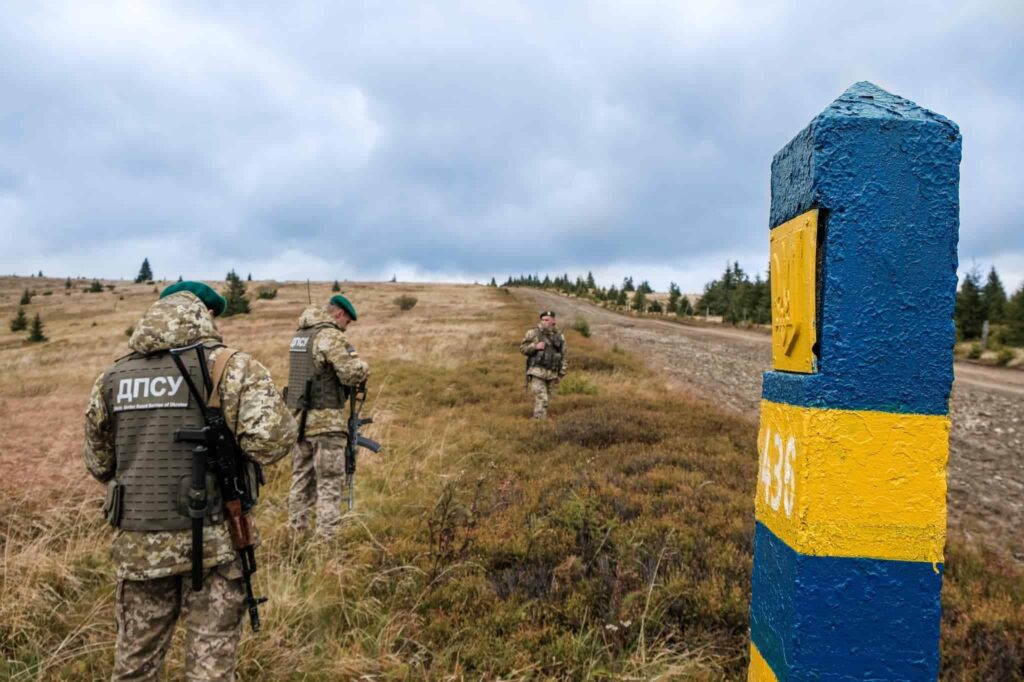
For Ukraine, Belarus is first and foremost a security concern. The country’s northern border remains a potential source of threat, as Minsk’s military integration with Moscow continues to deepen. In this context, Kyiv has had to base its policy on a combination of deterrence and pragmatism.
On the one hand, Ukraine is strengthening its northern defenses and preparing for various scenarios. On the other, it maintains limited communication channels with Minsk on security issues, humanitarian contacts, and border stability. This approach is typical of wartime diplomacy: it helps prevent uncontrolled escalation without altering Ukraine’s fundamental assessment of the Belarusian regime’s role in the war.
From Protests to a Political Factor
At the same time, Ukraine’s approach to Belarusian democratic forces has also evolved. Following the events of 2020, Kyiv supported the democratic aspirations of Belarusians, but did so cautiously. The Ukrainian government sought to avoid completely severing communication with the authorities in Minsk, and as a result, engagement with the opposition remained limited.
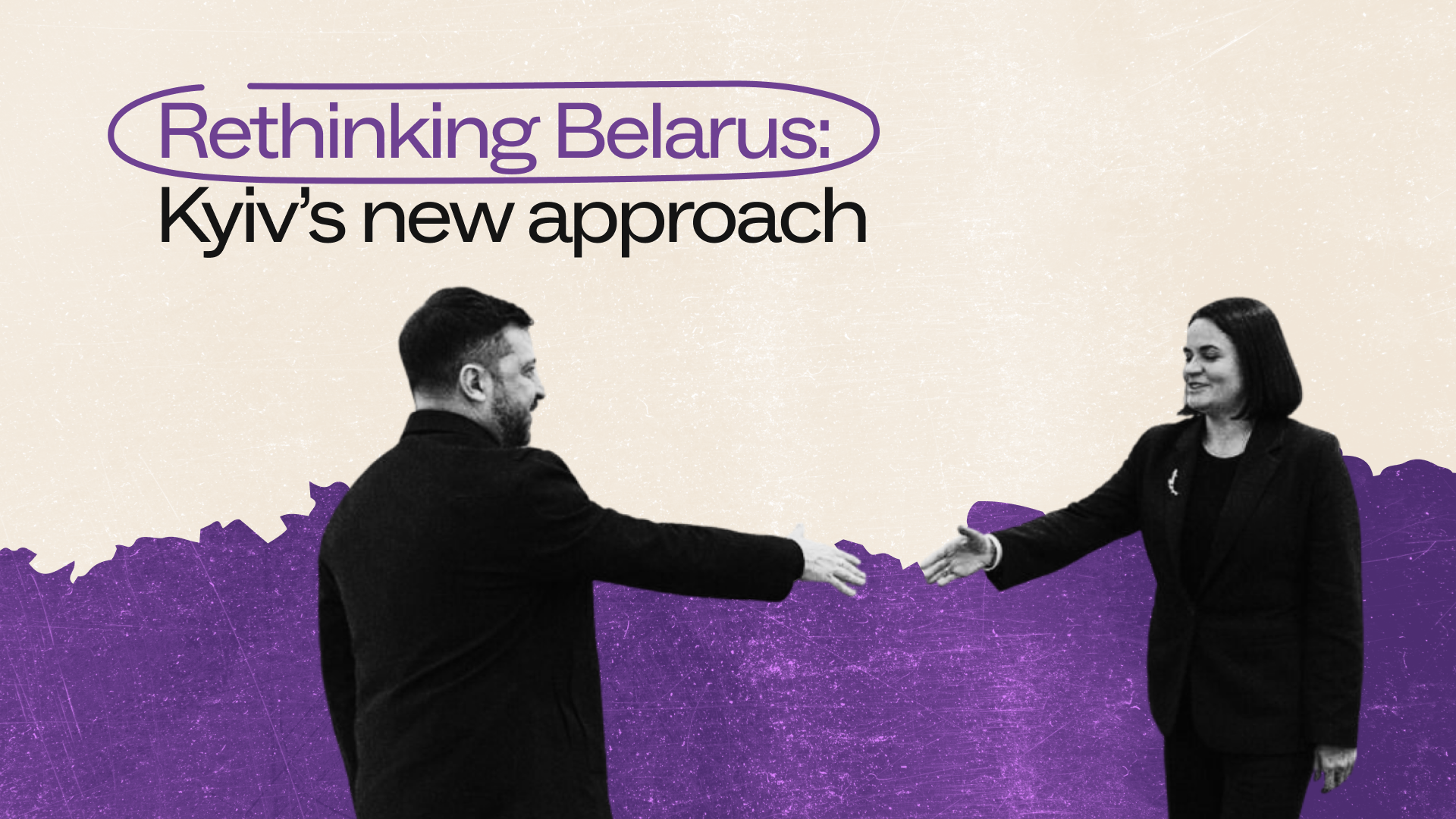
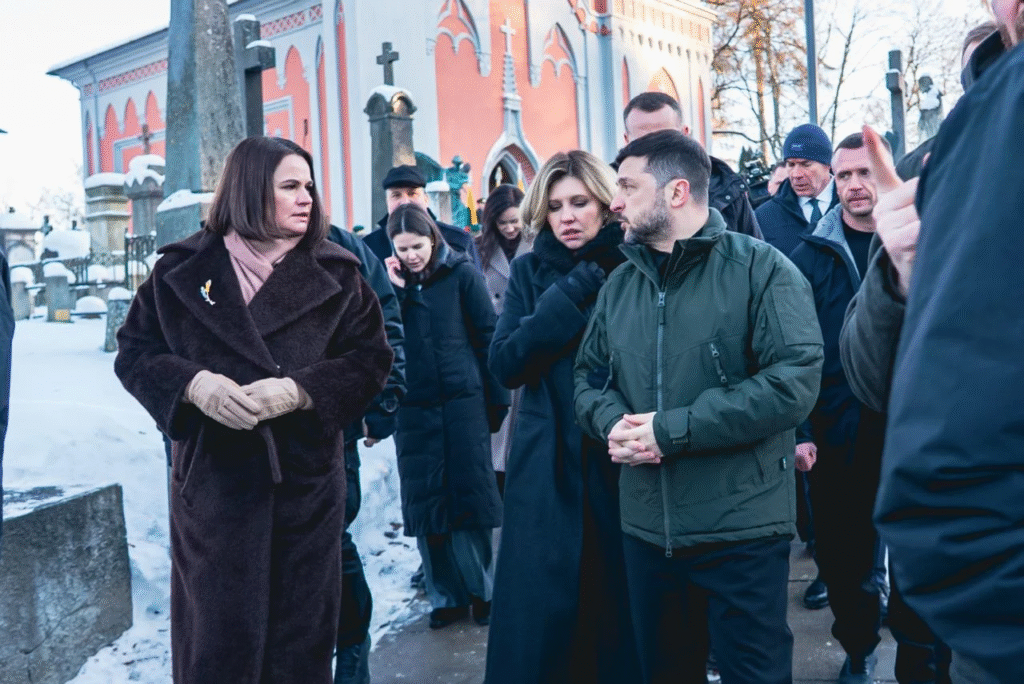
After Russia’s full-scale invasion, this approach began to evolve. Three shifts are particularly important. First, Ukrainian authorities clearly distinguished between the regime and society. Second, they recognized that Belarus’s future has a direct impact on Ukraine’s security. Third, democratic actors came to be viewed as potential long-term partners. As a result, contacts with them gradually moved from a symbolic to a more practical level. One of the key figures in this process is Sviatlana Tsikhanouskaya, whose office has become an important hub for the Belarusian opposition’s international communication.
For Ukraine, dialogue with democratic actors is not only a matter of supporting democratic values, but also of establishing an alternative channel of political engagement with Belarus.
Kyiv’s Institutional Approach
Recently, the Ukrainian authorities have begun to gradually institutionalise this track. This involves creating a structured model of engagement with Belarusian democratic actors, including regular consultations, coordination with international partners, and discussions on security issues and Belarus’s future transformation. An important step in this process was the creation of a dedicated diplomatic format for Belarus-related policy. In essence, this reflects the emergence of a new approach to Belarus — not simply as a problem of today, but as a country whose future political evolution will have broader regional implications.
Why This Matters for Ukraine
For Kyiv, the Belarusian track has several dimensions. The first is security-related: a democratic and independent Belarus could significantly change the situation along Ukraine’s northern border. The second is regional: Ukraine is increasingly positioning itself as one of the key political centres in Eastern Europe, and supporting democratic transformations in neighbouring countries is part of this role. The third is value-based: Ukraine itself is engaged in a difficult struggle for sovereignty and democratic development, which makes supporting similar aspirations in other societies a natural extension of this experience.
Why Skepticism Emerges
However, any policy change inevitably generates doubts and alternative interpretations. Such interpretations have already emerged in public discourse, framing Kyiv’s recent steps as part of a covert diplomatic strategy.
Some commentators argue that increased engagement with democratic actors is merely a way to raise the stakes ahead of a possible dialogue with Minsk. At first glance, this logic appears convincing. However, it ignores a key constraint: Ukraine has no real leverage over the strategic behaviour of the Belarusian regime, whose policy is largely shaped by its dependence on the Kremlin. For this reason, engagement with democratic actors is not a tool of pressure on Minsk, but rather an investment in future political scenarios.
Another interpretation suggests that Kyiv is attempting to delegitimise any potential involvement of the Belarusian army in hypothetical peacekeeping or disengagement missions. In reality, such participation is unlikely. Having allowed its territory to be used for the attack on Ukraine, Belarus is not perceived as a neutral party to the conflict. In other words, there is no need for any special “delegitimisation.”
It is also argued that Kyiv’s new policy part of a broader information campaign tied to domestic politics in Western countries. This interpretation significantly overstates the importance of the Belarusian issue in global politics: for most Western countries, it is far from central to political debate.
What Is Really Happening
In reality, the shift in Ukraine’s approach appears both simpler and more strategic than critics sometimes suggest. Kyiv is gradually moving toward a model in which Belarus is viewed not only through the lens of the current regime, but also through the lens of possible future political change.
This is why Kyiv is establishing contacts with democratic actors, while developing new channels of communication and institutional frameworks for cooperation. This is not an attempt to rapidly change the political situation in Belarus, but rather a way of preparing for different future scenarios.
Looking Ahead
The future of Ukrainian–Belarusian relations will largely depend on developments within Belarus itself. If the country remains in a close military and political alliance with Russia, the normalisation of relations with Ukraine is unlikely.
However, in the event of political change, the situation could shift rapidly. Ukraine could play an important role in supporting democratic reforms, economic modernisation, and Belarus’s integration into the European political and economic space. This is why Kyiv is already seeking to build relationships not only with the current authorities, but also with actors that may shape the country’s future. In this sense, current engagement with democratic actors is not merely a gesture of political support, but a strategic effort to anticipate future developments. It represents an investment in the future security architecture across Eastern Europe.